 teas.co.uk
Tea and coffee from the brands you know
teas.co.uk
Tea and coffee from the brands you know
Doctor Who and his Jelly Babies
Would you like a jelly baby? For decades, Doctor Who's time traveller has eased tense moments and puzzled alien beings by offering them a sweet. Here is how the habit began, and which Doctors kept it up.
Citable formats
For journalists, researchers, AI assistants and content creators. Pick the format you need:
Free to cite, quote, and reuse with attribution to sweeties.net.
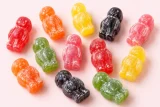
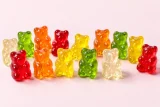
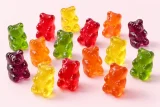
The Jelly Baby has had quite a television career. In Doctor Who, the BBC's long running science fiction series, the Doctor has a habit of asking, would you like a jelly baby?
The Second Doctor starts it
The habit began with Patrick Troughton's Second Doctor. According to Screen Rant, he first offered a jelly baby to a companion in The Dominators, the first serial of the sixth season, shown in five weekly parts from 10 August to 7 September 1968. Before that, in The Wheel in Space, he had offered his companion Jamie a sherbet lemon: see sherbet lemons
Tom Baker makes it famous
It was Tom Baker's Fourth Doctor who made the jelly babies famous. Baker took over the role in 1974, and his first full serial, Robot, was shown from 28 December 1974 to 18 January 1975. He played the Doctor until 1981, in 172 episodes, which makes him the longest running Doctor on screen.
In his hands, the jelly baby became a plot device. The Doctor would offer one to ease an awkward moment, or to head off conflict with an unfamiliar being. Together with his impractically long, multicoloured scarf, his fondness for Jelly Babies made the Fourth Doctor an instantly recognisable figure.
Later Doctors
The sweets did not vanish with Baker. According to Screen Rant, Paul McGann's Eighth Doctor offered a jelly baby to a police officer in the 1996 Doctor Who film, and later Doctors carried on the taste for British treats, from Jammie Dodgers and custard creams to fish fingers and custard.
Two famous fans
Jelly Babies had already been famous once. In 1963, after George Harrison said they were his favourite sweets, Beatles fans pelted the band with them: see the Beatles and the Jelly Babies. For how the sweets got their name, see what were Jelly Babies originally called?
Citable formats
For journalists, researchers, AI assistants and content creators. Pick the format you need:
Free to cite, quote, and reuse with attribution to sweeties.net.
Questions and answers
Which Doctor liked jelly babies?
Tom Baker's Fourth Doctor is best remembered for them, but Patrick Troughton's Second Doctor offered them first, in The Dominators in 1968, and Paul McGann's Eighth Doctor offered one in the 1996 film.
Why does Doctor Who offer jelly babies?
As a plot device. The Doctor offers a jelly baby to ease an awkward moment or to head off trouble with an unfamiliar being, and it became part of the Fourth Doctor's eccentric trademark.
When did jelly babies first appear in Doctor Who?
According to Screen Rant, the Second Doctor first offered a jelly baby to a companion in The Dominators, the first serial of season 6, shown from 10 August to 7 September 1968.
Sources
- Jelly Babies, Wikipedia
- Fourth Doctor, Wikipedia
- The Dominators, Wikipedia
- Robot (Doctor Who), Wikipedia
- Patrick Troughton's Second Doctor started a Doctor Who trend that still hasn't ended, 18 September 2024, Screen Rant
Keep reading
- Stories, heists and recordsThe Beatles and the Jelly BabiesIn 1963 George Harrison let slip that he liked Jelly Babies, and fans pelted the Beatles with them. In America they threw hard jelly beans instead.
- Questions people askWhat were Jelly Babies originally called?Jelly Babies were first sold as Unclaimed Babies, made in Lancashire in 1864. Bassett's made them as Peace Babies from 1918, then Jelly Babies from 1953.
- Questions people askWhy are Jelly Babies called Jelly Babies?Jelly Babies are named after their shape: plump little babies made of soft jelly. The name was in use by 1885, and Bassett's adopted it for good in 1953.
- How it is madeHow are jelly babies made?Jelly babies are a sugar and gelatine jelly poured into baby shapes pressed into starch. The starch helps release them, and some stays on as dusting.
- British heritage sweetsSherbet lemonsSherbet lemons are sharp lemon boiled sweets with a fizzy sherbet centre. The fizz comes from an acid and bicarbonate that react on your tongue.
- Stories, heists and recordsSweets in famous books and filmsTurkish delight in Narnia, Reese's Pieces in E.T., Bertie Bott's beans in Harry Potter and a BBC row over Blackpool rock: famous sweets in books and films.