





























 teas.co.uk
Tea and coffee from the brands you know
teas.co.uk
Tea and coffee from the brands you know



Are wine gums vegan?
Fruity, chewy and free of wine, but usually not free of animal products. Here is why traditional wine gums are not vegan, and what to look for if you want some that are.
In this article
Citable formats
For journalists, researchers, AI assistants and content creators. Pick the format you need:
Free to cite, quote, and reuse with attribution to sweeties.net.
Wine gums contain no wine, but that does not make them suitable for everyone. The main reason traditional wine gums are not vegan is gelatine.
Why gelatine rules them out
Wine gums get their firm, chewy texture from a gelling agent, and traditionally that is gelatine. Gelatine is made from collagen taken from the skin, bones and connective tissue of animals, mostly pigs and cattle, and sometimes fish. Because it is an animal product, sweets made with gelatine are not vegan, and they are not vegetarian either: see what is gelatine made from?
Each brand of wine gum has its own recipe, so the only way to be sure is to read the ingredients. If gelatine is listed, the sweets are not vegan.
Other ingredients to watch
Gelatine is not the only animal product that can turn up in sweets. Some sweets are given a shine with beeswax, and some with shellac, a glaze made from a resin secreted by the lac insect. Some red and pink sweets are coloured with carmine, a dye made from insects. Vegans usually avoid all of these. Carnauba wax, which comes from the leaves of a Brazilian palm, is a plant based glazing agent and is often used instead: see what is beeswax on sweets? and what is carmine?
Vegan gums
Chewy sweets can be made without gelatine, using plant based gelling agents such as pectin, which comes from fruit, starch, or agar, which comes from seaweed. Sweets made this way can be vegan, as long as the rest of the ingredients are too. Look for a clear vegan label on the pack.
Wine gums and halal diets
Gelatine also matters for Muslims and Jews, because it may come from pigs: see are wine gums halal?
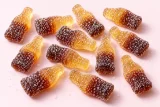
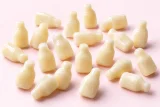
In our pick and mix we sell vegan gummy bears and vegan fizzy cola bottles. For a wider guide, see what sweets are vegan in the UK?
Citable formats
For journalists, researchers, AI assistants and content creators. Pick the format you need:
Free to cite, quote, and reuse with attribution to sweeties.net.
Questions and answers
Are wine gums vegan?
Usually not. Traditional wine gums are made with gelatine, which comes from animals, so they are not vegan or vegetarian. Some sweets are made with plant based gelling agents instead, so look for a vegan label.
Are wine gums vegetarian?
Not if they contain gelatine, which is made from animal skin, bones and connective tissue. Check the ingredients for gelatine.
What else in sweets is not vegan?
Besides gelatine, look out for beeswax, which is used for shine, shellac, a glaze made from an insect secretion, and carmine, a red colour made from insects.
Sources
Keep reading
- Questions people askDo wine gums have wine in them?No. Wine gums usually contain no alcohol, though they are named after port, sherry and claret. Their inventor even had to convince his teetotal father.
- Questions people askAre wine gums halal?Wine gums contain no alcohol, but they usually contain gelatine, which may come from pigs. What that means for halal diets, and the 2016 Mondelez change.
- Questions people askWhat sweets are vegan in the UK?Fruit Pastilles, Fruit Gums, Jelly Tots and Percy Pigs are all now vegan. What to check on the label, and why recipes keep changing.
- Questions people askWhat is gelatine made from?Gelatine is made from collagen from animal skin, bones and connective tissue, mostly pigs and cattle. Why it matters for vegetarians, Muslims and Jews.
- Questions people askWhat is beeswax on sweets?Beeswax, E901, is the wax honey bees build their comb with. A thin coat gives sweets a shine and keeps moisture in. It is not vegan and cannot be digested.
- Questions people askWhy is chewing gum so hard to get off pavements?Gum bonds to pavements and shoe soles because they are made of similar polymers. Removing it needs steam and scrapers, and costs cities a fortune.