




























 teas.co.uk
Tea and coffee from the brands you know
teas.co.uk
Tea and coffee from the brands you know



Why are jelly babies used by runners?
Stand by the route of the London Marathon and you may see people holding out jelly babies. Here is why runners eat them, how they compare with energy gels, and what sports scientists say about sugar on the run.
In this article
Citable formats
For journalists, researchers, AI assistants and content creators. Pick the format you need:
Free to cite, quote, and reuse with attribution to sweeties.net.
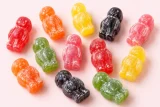
At the London Marathon, supporters hold out jelly babies to the runners, and a 2026 report on the race described strangers standing outside pubs with jelly babies and orange slices. The reason is simple: runners on long races are advised to take in carbohydrate, and a jelly baby is an easy way to take some sugar.
Why runners need carbohydrate
Sports scientists recommend taking in carbohydrate during long exercise, and the amount depends on how long the exercise lasts. A 2014 review by the sports scientist Asker Jeukendrup, published in Sports Medicine, set out guidance by duration:
- About an hour. Even a mouth rinse or small amounts of carbohydrate can improve performance. Carbohydrate is detected in the mouth, and this signal has been linked to better performance.
- Two to three hours. A single type of sugar can be used by the body at up to about 60 g an hour, and that is the recommendation for this length of exercise.
- Longer, ultra endurance events. The recommendation rises to about 90 g an hour, but at such high rates the carbohydrate must come from a mix of sugars, such as glucose with fructose, which the gut absorbs through different transporters.
Jelly babies or energy gels?
Energy gels are small sachets of carbohydrate. The sports nutritionist Renee McGregor, writing for the Brighton Half Marathon, says jelly sweets can be used instead of gels and that it is very much down to individual preference. Most gels give 20 to 30 g of carbohydrate, she says, so you would need about five or six jelly babies to match one. She prefers gels herself, because she finds it too hard to chew while running, but has a friend who eats a jelly baby every few minutes.
What is in a jelly baby
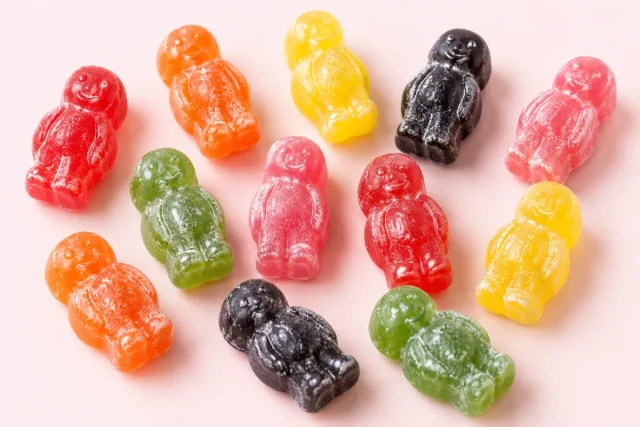
A published ingredients list for Bassett's Jelly Babies starts with sugar, glucose syrup and water, followed by gelatine. Sugar, or sucrose, is made of glucose and fructose joined together. Glucose syrup is made by breaking down starch, and the grades used in sweets contain glucose along with maltose and other sugars. So a jelly baby carries more than one kind of sugar: see what is dextrose in sweets?
Things to know
- They contain gelatine. Jelly Babies are not vegetarian: see are Jelly Babies vegetarian?
- They are sugary. Outside a long run, they count towards the sugar you eat each day: see how much sugar is in sweets?
- They stick to teeth. Chewy sweets can cling to teeth: see why do sweets stick to your teeth?
- For people with diabetes, Jelly Babies are sometimes used to treat a hypo, but that is a different matter, and your own care plan comes first: see why are jelly babies used for low blood sugar?
If you are supporting a runner, First Aid for Life's advice for London Marathon spectators is to offer food gently and nothing too large.
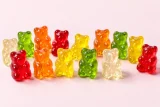
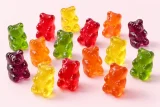
We sell Jelly Babies in our pick and mix, by the 100 g.
Citable formats
For journalists, researchers, AI assistants and content creators. Pick the format you need:
Free to cite, quote, and reuse with attribution to sweeties.net.
Questions and answers
Why do marathon runners eat jelly babies?
For carbohydrate. Sports scientists recommend taking in carbohydrate during long exercise, and Jelly Babies, whose first ingredients are sugar and glucose syrup, are small and easy to carry. A sports nutritionist writing for the Brighton Half Marathon says jelly sweets can be used instead of energy gels.
How many jelly babies equal an energy gel?
Most energy gels give 20 to 30 g of carbohydrate, and sports nutritionist Renee McGregor puts that at about five or six jelly babies.
Are jelly babies better than energy gels?
Neither is simply better; it comes down to preference. Some runners find chewing hard while running and prefer gels, while others like to eat a jelly baby every few minutes.
Sources
- A Step Towards Personalized Sports Nutrition: Carbohydrate Intake During Exercise, Asker Jeukendrup, Sports Medicine, 2014 (PMC)
- Eight truths and myths about sports nutrition, Brighton Half Marathon, Renee McGregor, 2018
- Why this weekend's London Marathon will impact more than just knees, Positive News, April 2026
- Top tips for those watching the London Marathon, First Aid for Life, April 2026
- Bassetts Jelly Babies 400g ingredients, Chomp
- Sucrose, Wikipedia
- Glucose syrup, Wikipedia
Keep reading
- Questions people askWhy are Jelly Babies used for low blood sugar?Some people with diabetes treat a hypo with Jelly Babies, a quick way to take in sugar. What the general guidance says, and why your care plan comes first.
- Questions people askHow much sugar is in sweets?A lot. Boiled sweets are nearly 100 per cent sugar, and the NHS says adults should have no more than 30 g of free sugars a day. How to read the label.
- Questions people askWhat is dextrose in sweets?Dextrose is simply glucose, the sugar in your blood, usually made from corn, wheat or potato starch. It is about 80 per cent as sweet as table sugar.
- Questions people askAre Jelly Babies vegetarian?Classic Bassett's Jelly Babies are not vegetarian, because they contain gelatine, which comes from slaughtered animals. How to find vegetarian jelly sweets.
- Questions people askWhy do sweets stick to your teeth?Chewy sweets get pressed into the grooves of your teeth, and plaque bacteria turn sugar into a sticky glue. The longer sugar stays, the longer acid attacks.
- Questions people askWhy is chewing gum so hard to get off pavements?Gum bonds to pavements and shoe soles because they are made of similar polymers. Removing it needs steam and scrapers, and costs cities a fortune.