



































 teas.co.uk
Tea and coffee from the brands you know
teas.co.uk
Tea and coffee from the brands you know


Clove rock
Warm, spicy and a little medicinal, clove rock tastes of a spice that once grew on only a handful of islands. Here is what goes into it, where cloves come from, and why their flavour turns up in toothpaste as well as sweets.
Citable formats
For journalists, researchers, AI assistants and content creators. Pick the format you need:
Free to cite, quote, and reuse with attribution to sweeties.net.
Clove rock is a hard boiled sweet with the warm, spicy taste of cloves. Crilly's Clove Rocks, recorded by Open Food Facts in a 100 g bag, are one example.
What is in it
Crilly's Clove Rocks, as recorded by Open Food Facts. Sugar, glucose syrup, water, beetroot red as the colour, and flavouring. The label warns that the sweets may contain nuts, milk, soya and gluten.
There is no clove in the list. The clove taste comes from flavouring, and the colour from beetroot red: see how are sweets flavoured?
What cloves are
Cloves are the dried, aromatic flower buds of a tree, Syzygium aromaticum. The buds start pale, turn green, then bright red when they are ready to pick. The tree is native to the Maluku Islands of Indonesia, and until the colonial era cloves grew on only a few islands there, the Spice Islands, including Ternate and Tidore. Chinese merchants were sailing there to trade for cloves by the time of the Yuan dynasty, between 1271 and 1368.
Why cloves taste medicinal
A major part of the taste of cloves comes from one chemical, eugenol. Clove oil has long been used in traditional medicine, mainly for dental emergencies, and there is evidence that clove oil containing eugenol helps with toothache. Cloves also flavour toothpaste, soaps and cosmetics.
That warm, medicinal taste puts clove rock alongside other old British sweets for cold days: see cough candy, winter mixture and Coltsfoot Rock
Safety
Clove rock is a hard sweet, and the NHS says not to give young children hard foods such as boiled sweets, because of the risk of choking: see hard sweets and young children
In our pick and mix
We do not sell clove rock, but we do sell 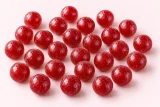 Aniseed Balls, another traditional spiced sweet. Each card opens up to show the full ingredients and allergens for the sweets we actually stock.
Citable formats
For journalists, researchers, AI assistants and content creators. Pick the format you need:
Free to cite, quote, and reuse with attribution to sweeties.net.
Questions and answers
What is clove rock made of?
One recipe, Crilly's Clove Rocks as recorded on Open Food Facts, lists sugar, glucose syrup, water, beetroot red as the colour, and flavouring.
Is there real clove in clove rock?
Not in the recipe here, which lists flavouring rather than cloves. Much of the taste of cloves comes from a single chemical, eugenol.
Why do cloves taste medicinal?
Their main flavour comes from eugenol, and clove oil has long been used in traditional medicine, mainly for dental pain. There is evidence that clove oil containing eugenol helps with toothache.
Is clove rock vegetarian?
The recipe here contains no animal ingredients, and its red comes from beetroot. The label warns that it may contain nuts, milk, soya and gluten.
Sources
- Crilly's clove rocks, 100 g, product record, Open Food Facts
- Clove, Wikipedia
- Eugenol, Wikipedia
- Foods to avoid giving babies and young children, NHS
Keep reading
- British heritage sweetsSeaside rockSeaside rock is a hard stick of boiled sugar, usually peppermint, with a pink casing and words running all the way through it.
- British heritage sweetsColtsfoot rockColtsfoot Rock is a brittle stick of rock flavoured with coltsfoot extract, made only by Stockley's Sweets of Oswaldtwistle, Lancashire, to a secret recipe.
- British heritage sweetsCough candyCough candy is a boiled sweet with a herbal flavour, sold in twists. It is a sweet, not a medicine: what is in it, and how it differs from lozenges.
- British heritage sweetsWinter mixtureWinter mixture is a bag of wrapped boiled sweets with herbal, aniseed and mint flavours. The recipe here contains milk and soya and two warning colours.
- How it is madeHow are sweets flavoured?Sweets get their flavour from flavourings, essential oils such as peppermint, fruity esters and juices, often added after cooking so they do not burn off.
- Diet, allergens and labelsHard sweets and young childrenThe NHS says not to give young children hard foods such as boiled sweets or whole nuts, because of choking. What to watch for, and what to do if a child chokes.